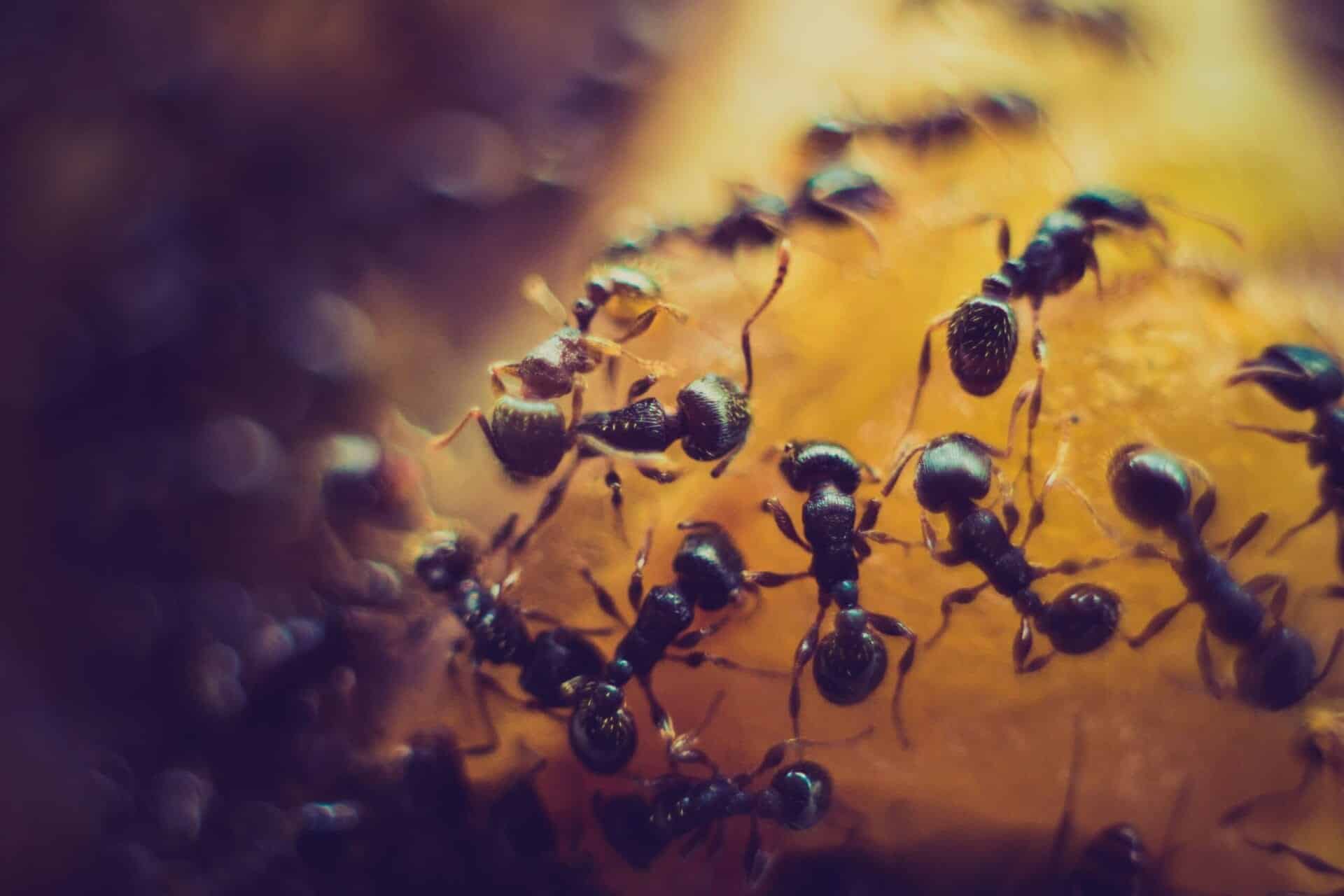

Carpenter ants can cause real structural damage if left unchecked. They’re the largest ants in the DMV, and they tunnel into wood to build nests. This guide covers how to spot them, stop them, and protect your home.
How to Identify Carpenter Ants
Carpenter ants are large (6-13 mm), usually black, with a single waist node and a smooth, rounded thorax. They build trails through your home and tunnel along the wood grain to create galleries for nesting.
Look for the signs of carpenter ant damage before it gets worse: sawdust-like frass near baseboards, hollow-sounding wood, and large ants on organized trails. Learn to tell them from other species with our carpenter ant vs black ant guide.
Why Non-Repellent Treatments Work Best
Many pest control programs use non-repellent products for carpenter ants. These treatments are undetectable, so workers walk through them and carry the product back to the parent colony. This wipes out the whole nest, not just the ants you see.
Store-bought sprays repel ants away from the treated spot but don’t reach the colony. That’s why they often make the problem worse by pushing ants to new locations.
Where to Look for Them
- Areas with poor ventilation and damp wood
- Rotting tree stumps and firewood near the house
- Around leaky pipes and areas with water damage
- Spots where you hear rustling sounds at night
- Along baseboards where you find frass (sawdust-like shavings)
Our technicians check these areas during every 78-point inspection. Finding the parent colony is key to solving the problem for good.

If you’re seeing this kind of damage around your home, it’s time for professional treatment.
Moisture: The Root Cause
Excess moisture is what draws carpenter ants in. Damp conditions plus decaying wood create the perfect nesting environment. If you fix the moisture, you remove the reason they came.
Fix all leaks around sinks, toilets, and exterior walls. Make sure crawl spaces and basements are well ventilated. Use dehumidifiers in damp areas. Repair or replace water-damaged wood.
Clean up decaying wood around your property. Move firewood at least 20 feet from the house. Remove old stumps and dead branches that touch or overhang the structure.
Seal cracks around utility lines, windows, and doors. Trim tree branches and shrubs so they don’t touch the house. Cut off the pathways ants use to get inside.
Taking these steps removes the conditions that brought carpenter ants in. But if they’re already established, the damage can be serious.
Treatment Options
Modern treatments use non-repellent products that gradually eliminate carpenter ants. Products like borate solutions and Alpine WSB target colonies without aggressive sprays. Understanding what carpenter ants eat helps pick the right bait.
A licensed technician develops a plan based on your home’s specific conditions. Follow-up visits make sure the parent colony and any satellite nests are fully controlled.
Watch for Spring Swarmers
During spring, look for carpenter ant swarmers, which are winged ants that fly out on warm days. Seeing swarmers means a mature colony is nearby and trying to spread. This is a signal to act fast.
Also watch for carpenter ant frass near wood surfaces and rustling sounds behind walls, especially at night when they’re most active.
If you have a carpenter ant problem, call us at 703-683-2000 or email info@bettertermite.com. If you’re in Alexandria, see our local pest control page. For Reston, check our Reston service.
